Why Isn’t My Queens Home Selling? 8 Reasons Buyers Aren’t Making Offers—and What to Do Next

Why Isn’t My Queens Home Selling? 8 Reasons Buyers Aren’t Making Offers—and What to Do Next

Your home is listed.


The photographs are online. The sign is outside. Buyers may have walked through the property. Yet the result you expected has not happened.


There are few serious inquiries, no strong offers or perhaps no offers at all.


If you are asking, “Why isn’t my Queens home selling or why didn't it sell?”, the answer is not always that something is wrong with the property. In many cases, the home has not been positioned correctly for the buyers currently searching in its price range.


A Queens home may struggle to sell because its asking price is not aligned with the market, the presentation does not create enough confidence, the marketing is failing to reach the right buyers, showing access is too restrictive or unresolved property questions are creating hesitation.


The good news is that a listing that has stalled is not necessarily a lost cause.


The right diagnosis can lead to a stronger strategy.


The Direct Answer: Why Is My Queens Home Not Selling?


The eight most common reasons a Queens home may sit without receiving an acceptable offer are:


1. The asking price is higher than buyers believe the property is worth.

2. The listing lost momentum during its first weeks on the market.

3. The photographs and marketing are not creating enough interest.

4. The property’s condition is creating uncertainty.

5. Showing access is too limited or inconvenient.

6. Property records, legal use or documentation are raising questions.

7. The home’s carrying costs or building requirements are reducing demand.

8. The seller’s strategy is not adapting to buyer feedback and new competition.


More than one issue may be affecting the listing at the same time. That is why an effective solution should begin with a complete review—not an automatic price reduction.


Was your Queens property already listed but failed to produce results?


Keller Williams Realty Landmark can connect you with a local agent who can review the pricing, presentation, buyer feedback, online positioning and competition surrounding your property.


Request a confidential Queens listing-strategy review


How Long Should It Take to Sell a Home in Queens?


There is no universal deadline for selling a Queens property.


According to the June 2026 Queens County Local Market Update from OneKey® MLS, the average time on market varied considerably by property type:


* Single-family homes: 55 days

* Condominiums: 75 days

* Co-ops: 94 days


The same report showed that single-family sellers received 97.2% of their original asking prices, condo sellers received 95.3%, and co-op sellers received 95.9%. These percentages do not account for seller concessions or down-payment assistance. 


These borough-wide numbers are useful benchmarks, but they do not guarantee how long a particular home should take to sell.


A renovated house with private parking in a low-inventory price range may attract immediate attention. A co-op with high monthly maintenance, restrictive financial requirements or several competing units may need considerably more time.


For a closer look at current pricing, inventory and market-time trends, read the Queens County Real Estate Market Update for June 2026


The more important question is:


How is your listing performing compared with the most relevant competing properties—not compared with every home in Queens?


1. The Asking Price Does Not Match Buyer Expectations


Price is not merely the number displayed on the listing.


It determines:


* Which buyers discover the property

* Which competing homes they compare it with

* Whether they schedule a showing

* How much urgency they feel

* Whether they believe negotiations are possible

* Whether the property qualifies for their financing


Sellers frequently say, “A buyer can always make an offer.”


Technically, that is true. In practice, many buyers do not make offers on homes they believe are substantially overpriced. They move on to another property that appears closer to market value.


An asking price may be too high when:


* Similar properties are selling for less.

* Competing homes offer more updates, space or amenities.

* The listing is receiving online views but few showings.

* Buyers repeatedly mention the price after visiting.

* Nearby properties are going under contract while yours remains available.

* The listing has accumulated significant market time without serious interest.

* Several buyers reach similar conclusions about the home’s value.


This does not mean the seller should accept a low price. It means the pricing strategy should be supported by current buyer behavior and comparable properties.


To understand the factors that may affect your property’s value, read How Much Is My Home Worth in Queens, NY? What Sellers Need to Know in 2026


Should You Reduce the Price?


Do not reduce the price simply because the home has been listed for a certain number of days.


First review:


* The number of online impressions

* Listing-page views

* Saves and shares

* Showing requests

* Repeat showings

* Open-house attendance

* Buyer-agent feedback

* Offers received

* Current competing listings

* New listings entering the market

* Recent pending and closed sales

* Whether the home appears in the correct buyer search ranges


A price adjustment should be meaningful enough to change the property’s competitive position. Repeated small reductions can make a seller appear reactive without introducing the home to a substantially different buyer pool.


2. The Listing Lost Its First-Market Advantage


A new listing often receives its highest level of attention during its initial launch.


Buyers who have already been searching may see it immediately. Local agents may send it to active clients. Listing platforms may identify it as new inventory.


That initial attention is valuable.


A home can waste its launch when it enters the market with:


* An unsupported asking price

* Weak or incomplete photographs

* Unfinished repairs

* Missing property information

* Limited showing availability

* No clear marketing plan

* An unprepared seller

* A description that fails to communicate the property’s value


Once those buyers have seen and rejected the listing, simply leaving it online may not change their minds.


The seller may need to create a legitimate reason for the market to reconsider the property. That could include improved presentation, updated photography, broader access, corrected information, a strategic price change or a complete relaunch.


3. The Photographs and Marketing Are Not Creating Interest


Most buyers form their first impression before entering the home.


They see the cover photograph, asking price, location, room count, property description and monthly costs. They then decide whether the home deserves additional attention.


Common marketing problems include:


* Dark or poorly composed photographs

* Cluttered rooms

* Missing photographs of important spaces

* An exterior image that does not present the home well

* No floor plan

* A vague or generic property description

* Incorrect or incomplete listing information

* Failure to explain renovations or valuable features

* Marketing that focuses on features without explaining benefits

* No strategy for reaching buyers beyond the basic MLS entry


A buyer should quickly understand what makes the property worth visiting.


For example:


* Private parking may reduce the daily inconvenience of street parking.

* A legal second unit may provide rental-income potential.

* Proximity to the Long Island Rail Road may make commuting more convenient.

* A first-floor bedroom may appeal to multigenerational households.

* A renovated kitchen may reduce the work a buyer must complete after closing.

* Outdoor space may offer room for entertaining, gardening or pets.


The marketing should translate the property into a lifestyle and financial opportunity without exaggerating or misrepresenting it.


4. The Property’s Condition Is Creating Uncertainty


A property does not need to be completely renovated to sell.


It does need to make sense at its asking price.


When buyers see visible damage, incomplete projects or poor maintenance, they may assume additional hidden problems exist. They may also overestimate the cost and difficulty of completing repairs.


Potential concerns include:


* Water stains or active leaks

* Peeling paint

* Damaged flooring

* Unfinished renovations

* Strong odors

* Excessive clutter

* Poor lighting

* Aging mechanical systems

* Roof concerns

* Electrical concerns

* Mold-like staining

* Broken fixtures

* Neglected landscaping

* Rooms that are difficult to understand


The solution is not automatically an expensive renovation.


Some homes benefit from cleaning, decluttering, paint, minor repairs, better lighting and improved staging. Other properties should be marketed honestly as renovation opportunities.


Before spending heavily, compare:


1. The likely selling price in the property’s current condition

2. The estimated cost and time required for improvements

3. The possible increase in buyer demand

4. The possible effect on net proceeds

5. The risk of over-improving for the neighborhood


The goal is not to make the home perfect. The goal is to make the property’s condition, price and buyer expectations align.


5. Showing the Home Is Too Difficult


Buyers cannot purchase a home they cannot conveniently evaluate.


Restrictive access can reduce the buyer pool, especially when competing homes are easier to see.


Common showing obstacles include:


* Very narrow appointment windows

* Requiring excessive notice

* Frequently declining requested appointments

* Allowing showings only on specific days

* Tenants who are difficult to coordinate with

* Pets that are not secured

* Sellers remaining in the property during showings

* Cluttered or inaccessible rooms

* Not allowing access to basements, garages or utility areas

* Canceling appointments at the last minute


Reasonable notice and security are important. Sellers should not feel forced to accept unsafe or chaotic access.


However, a showing plan should reflect how qualified buyers search. Many buyers have work schedules, childcare responsibilities, travel limitations, and multiple homes to visit.


A clear process can protect the seller while making the property accessible to serious purchasers.


6. Property Records or Legal-Use Questions Are Creating Concern


Queens includes single-family homes, two- and three-family properties, co-ops, condos, mixed-use buildings, and homes that have been altered over many decades.


A property may attract initial interest and then lose buyers when questions arise about:


* The certificate of occupancy

* The legal number of units

* Finished basements or attics

* Garage conversions

* Extensions

* Additional kitchens or bathrooms

* Open permits

* Open violations

* Property-tax records

* Building classification

* Floor plans that do not match public records

* Work completed without documentation


These issues do not automatically make a home impossible to sell.


They may, however, affect financing, appraisal, insurance, attorney review, title clearance, buyer confidence, and the eventual closing timeline.


The worst time to discover a serious discrepancy is after accepting an offer.


Sellers should consider reviewing the property’s records before listing and consulting the appropriate attorney, architect, expediter, title professional, or other licensed specialist when necessary.


Owners of rental properties should also review How to Sell a Tenant-Occupied Multifamily Property in Queens, NY, which discusses leases, rental information, access, legal use and buyer positioning.


7. Monthly Costs or Building Requirements Are Reducing Demand


For Queens co-ops and condos, the apartment’s asking price is only part of the buyer’s decision.


Buyers may also evaluate:


* Monthly maintenance or common charges

* Property taxes

* Current assessments

* Potential upcoming assessments

* Flip taxes

* Minimum down-payment requirements

* Debt-to-income requirements

* Post-closing liquidity requirements

* Subletting policies

* Pet restrictions

* Building financials

* Insurance concerns

* Amenities

* Parking availability

* Financing restrictions


Two apartments with similar layouts may appeal to very different numbers of buyers because of their buildings’ costs and requirements.


Sellers cannot control every building-related factor. They can control how accurately the property is priced, how clearly the requirements are communicated, and whether prospective buyers are screened appropriately.


Hiding important information does not create stronger demand. It creates wasted showings and failed negotiations.


8. The Strategy Is Not Responding to the Market


The market does not owe a seller an offer.


A listing strategy should be reviewed as new information becomes available.


That information may include:


* Showing feedback

* Changes in online engagement

* New competing listings

* Competing price reductions

* Nearby pending sales

* Comparable closed sales

* Interest-rate changes

* Financing challenges

* Seasonal changes

* Inspection concerns

* Appraisal issues

* Repeated buyer objections


One negative comment should not dictate the entire strategy. A consistent pattern should not be ignored.


For example, one buyer saying the kitchen is dated may reflect personal preference. Ten buyers saying the home requires more work than expected may indicate a positioning problem.


The seller and agent should have a defined review process rather than waiting indefinitely and hoping the market changes.


What Do Showings Without Offers Usually Mean?


Showings without offers usually indicate that buyers are interested enough to inspect the property but do not believe the total value justifies moving forward.


The objection may involve:


* Price

* Condition

* Layout

* Location

* Monthly costs

* Renovation requirements

* Property records

* A stronger competing home

* A combination of several smaller concerns


This is different from receiving no showings.


Few or No Showings


When a listing receives little showing activity, review:


* Price

* Cover photograph

* Online presentation

* Search visibility

* Property information

* Showing instructions

* Buyer demand in the price range


Showings but No Offers


When buyers visit but do not make offers, review:


* The in-person condition

* Whether the photographs set accurate expectations

* Odors, lighting and presentation

* Buyer feedback

* Price relative to condition

* Layout or legal-use concerns

* Competing properties

* Whether purchasers see enough value to act


Offers That Are Consistently Too Low


Repeated low offers may indicate:


* Buyers perceive significant repair costs.

* The asking price exceeds comparable sales.

* The market is pricing in a property-specific risk.

* Buyers believe the seller has limited leverage.

* The property is attracting a different buyer category than expected.


Low offers should not be accepted automatically. They should be analyzed for what they reveal about the market.


Should You Withdraw and Relist Your Queens Home?


Withdrawing and relisting may help when it is part of a genuine strategic reset.


It is not a magic trick that erases the property’s history or changes its value.


A relaunch may be appropriate when:


* The pricing strategy has materially changed.

* Repairs or improvements have been completed.

* The home has been professionally staged.

* New photography and marketing materials are ready.

* Showing access has improved.

* Incorrect listing information has been corrected.

* A seasonal or personal timing issue has changed.

* The prior listing failed to reach the correct buyer pool.

* The seller is prepared to respond differently to the market.


A relaunch is unlikely to solve the problem when the same home returns with the same price, presentation, restrictions, and strategy.


Buyers and agents may recognize the property. The relaunch must give them a credible reason to take another look.


What Is a Queens Listing-Rescue Review?


A listing-rescue review is a detailed assessment of why a property did not produce the expected result.


It should examine:


* Original and current asking price

* Comparable closed sales

* Pending sales

* Active competition

* Expired and withdrawn listings

* Days on market

* Price-change history

* Online engagement

* Showing activity

* Buyer and agent feedback

* Photographs

* Description and property information

* Showing availability

* Property condition

* Legal-use or documentation concerns

* Offers and negotiations

* Seller goals and timing

* Estimated net proceeds


The purpose is not to criticize the seller or previous agent.


The purpose is to determine what the market has already communicated and build a better plan from that information.


Do Not Focus Only on the Sale Price


A higher offer does not automatically create a better result.


Sellers should also evaluate:


* Financing strength

* Down payment

* Appraisal risk

* Inspection terms

* Proposed credits

* Closing timeline

* Sale contingencies

* Occupancy terms

* Attorney-review concerns

* The buyer’s likelihood of completing the transaction


The amount you keep after the sale also matters more than the headline price.


Review How Much Does It Cost to Sell a Home in Queens—and What Will You Actually Net? before comparing possible strategies.


A personalized seller net sheet can show how different prices, credits, repairs and timelines may affect what you ultimately walk away with.


What Queens Home Sellers Should Do Next


If your property is not selling or didn't successfully sell, do not begin by randomly changing everything.


Start with four questions:


1. Are the Right Buyers Finding the Property?


Review the pricing range, marketing exposure, listing information and presentation.


2. Are Buyers Scheduling Showings?


If not, determine whether the obstacle is price, presentation, demand or access.


3. What Are Buyers Saying After They Visit?


Look for patterns rather than isolated opinions.


4. What Has Changed Since the Home Was Listed?


Review new competition, recent sales, financing conditions and your own timeline.


Then determine whether the right move is to:


* Maintain the strategy

* Improve the presentation

* Increase showing access

* Correct property information

* Complete targeted repairs

* Reposition the marketing

* Adjust the price

* Withdraw temporarily

* Relaunch the property

* Consider an alternative selling timeline


Frequently Asked Questions About a Queens Home That Is Not Selling


Why am I getting showings but no offers on my Queens home?


Buyers may be interested in the property but believe the price does not reflect its condition, layout, location, monthly costs or competition. Review repeated buyer feedback, comparable sales, current listings and whether the in-person experience matches the online presentation.


How long should I wait before reducing my asking price?


There is no universal number of days. Review showing activity, online engagement, competing listings, buyer feedback and recent comparable sales. A property receiving no meaningful activity may require a faster response than a property attracting repeat showings or serious discussions.


Does a listing with high days on market look bad to buyers?


High market time can cause buyers to wonder why the property has not sold and whether the seller may negotiate. It does not make the home unsellable. A credible change in price, condition, access, presentation or marketing can give buyers a reason to reconsider it.


Can I change real estate agents if my listing is not selling?


Your options depend on the terms of your listing agreement. Review the agreement and discuss your concerns directly with your agent or brokerage. Do not sign a new listing agreement until you understand whether the existing agreement has ended or been properly released.


Can Keller Williams Realty Landmark help relaunch an expired or withdrawn listing?


Keller Williams Realty Landmark can connect homeowners with a local agent who can evaluate the prior listing, current competition, likely value, property presentation, showing strategy and seller goals. The agent can then recommend whether a relaunch, repositioning or different timeline makes sense.


Your Home Did Not Fail—Your Strategy May Need to Change


A home that has not sold is not automatically undesirable.


It may have entered the market with the wrong price, weak presentation, limited access, unresolved questions or a strategy that did not adapt quickly enough.


The next step should not be guessing.


It should be understanding:


* Why buyers have not acted

* What the market is communicating

* Which changes could improve the outcome

* Whether those changes are worth the cost

* How the revised plan affects your net proceeds and next move


For a broader look at current seller opportunities, read Thinking About Selling in Queens, Brooklyn, or Long Island? Here’s What 2026 Is Showing Us


Request a Confidential Queens Listing-Rescue Review


Was your home listed and came off the market without acceptable offers?


Did your listing expire or get withdrawn?


Are you considering selling but want to avoid losing the first weeks on the market?


Keller Williams Realty Landmark can connect you with a local real estate professional who can help you review:


* Your home’s likely market value

* Current competing properties

* Buyer activity in your price range

* Your previous listing performance

* Pricing and positioning

* Preparation priorities

* Marketing opportunities

* Estimated net proceeds

* Your timeline and next move


Connect with Keller Williams Realty Landmark for a confidential seller-strategy consultation.


You can also request a personalized Queens home-value and equity review


Do not simply put the property back on the market and hope for a different result.


Find the problem. Fix the strategy. Relaunch with purpose.


*This article is provided for general informational purposes and is not legal, financial, tax, appraisal, architectural or property-record advice. Market statistics are historical and do not guarantee the value, marketing time or sale price of any individual property. Homeowners should consult the appropriate licensed professionals regarding their specific circumstances.*

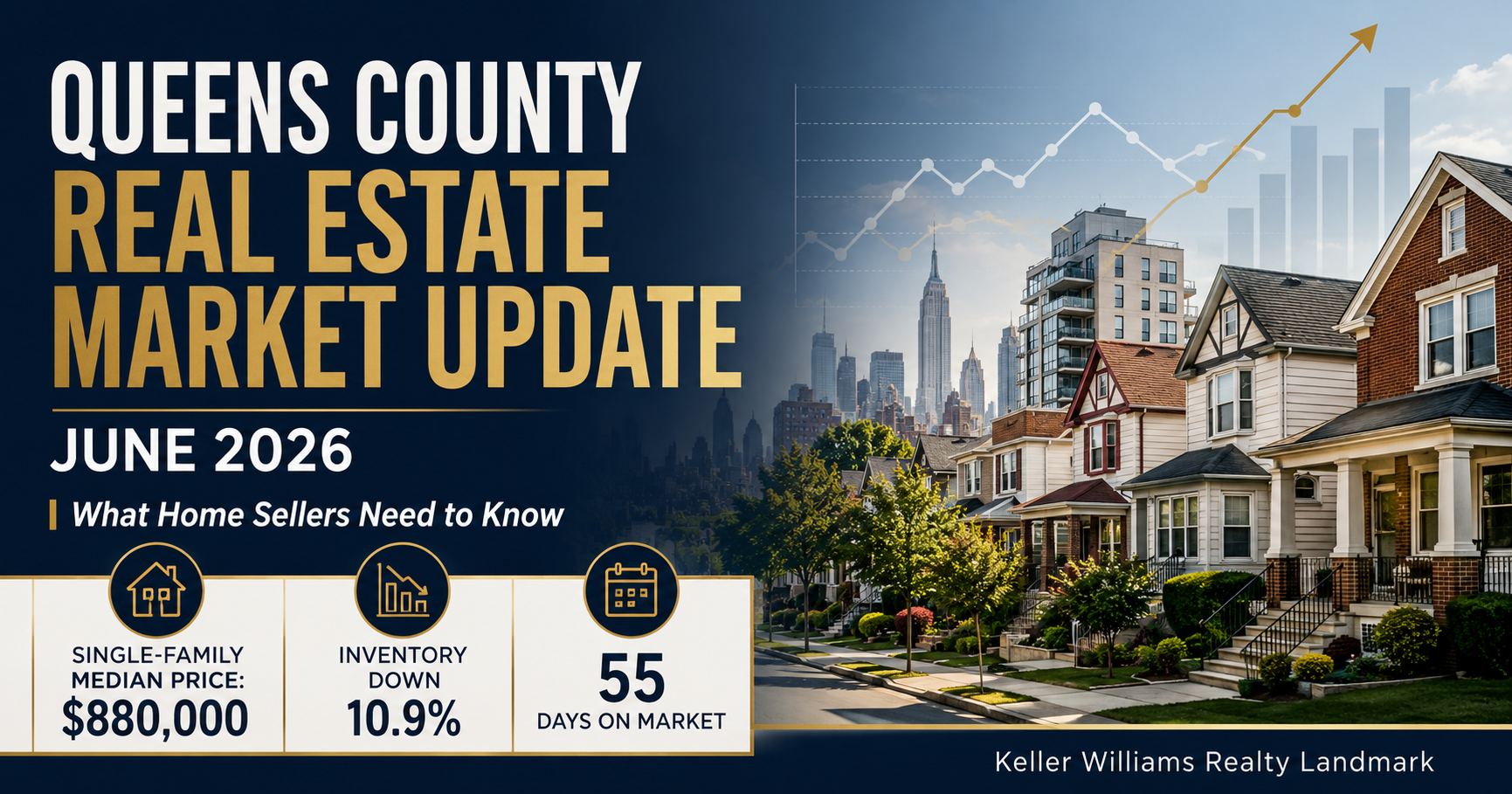
Queens County real estate market update June 2026 showing home prices, inventory & days on market
By KW Landmark July 16, 2026
See June 2026 Queens home prices, sales, inventory and days on market for houses, condos and co-ops—and what the data means for sellers.
By KW Landmark June 30, 2026
Selling a tenant-occupied multifamily property in Queens, NY can be a smart move, but it requires more planning than selling a vacant one-family home. When tenants are involved, the sale may be affected by lease terms, rental income, tenant cooperation, showing access, property records, financing, buyer expectations, and local housing rules. If you own a two-family, three-family, four-family, or other multifamily property in Queens and you are thinking about selling, the most important thing is to understand your options before you list. At Keller Williams Realty Landmark , we can connect you with a local real estate agent who can help you review your property, understand your potential value , and create a selling strategy that fits your situation. Can You Sell a Tenant-Occupied Multifamily Property in Queens? Yes, in many cases, you can sell a tenant-occupied multifamily property in Queens while tenants are still living there. A sale does not automatically mean the tenants have to move out. Existing leases, tenant rights, rent amounts, renewal terms, and property regulations may affect what happens before, during, and after the sale. Some buyers may actually prefer a tenant-occupied property because it already produces rental income. Other buyers may prefer a vacant or partially vacant property because they want to live in one unit, renovate, or choose their own tenants. The right strategy depends on the property, the tenants, the leases, the rental income, the condition of the building, and your personal goals as the seller. Why Selling a Tenant-Occupied Multifamily Property Is Different Selling a tenant-occupied multifamily property is not the same as selling a vacant single-family home. When tenants are involved, you are not only selling the physical property. You may also be selling the income stream, the lease obligations, the tenant relationships, and the future potential of the building. That means buyers may look closely at: Current rents Lease expiration dates Security deposits Tenant payment history Rent regulation status Property condition Legal use Open permits or violations Utility responsibilities Showing access Net operating income Future rental upside For a multifamily buyer, the numbers matter. For an owner-occupant buyer, flexibility may matter. For an investor, documentation matters. For a lender, legal use and income may matter. That is why preparation is so important. A tenant-occupied sale punishes sloppy preparation. The seller who gathers information early usually has more leverage than the seller who waits until a buyer, attorney, lender, inspector, or tenant creates pressure. Step 1: Review the Lease Terms Before Listing Before you put a tenant-occupied multifamily property on the market, review every lease and rental agreement connected to the property. You should know: Are the tenants on written leases or month-to-month agreements? When does each lease expire? What is the monthly rent for each unit? Are the tenants current on rent? How much security deposit is being held? Are utilities included in the rent? Are there parking, storage, laundry, or garage agreements? Are there any verbal agreements with tenants? Are pets allowed? Are any tenants related to the owner? Are any tenants paying below-market rent? Are any tenants rent-stabilized or otherwise regulated? Do not wait until a buyer asks for lease information to start looking for it. If you cannot clearly explain who lives in each unit, how much they pay, what their lease terms are, and what income the property produces, buyers may lose confidence. That can lead to lower offers, more negotiation, delayed contracts, or a deal falling apart. Step 2: Build a Clean Rent Roll A rent roll is one of the most important documents when selling a multifamily property. A rent roll is a summary of the rental income and tenant information for the building. It helps buyers understand the income the property currently produces and what they may be buying. A strong rent roll may include: Unit number Monthly rent Lease start date Lease expiration date Security deposit amount Payment status Utilities included or excluded Parking income Storage income Laundry income Other income Notes about vacancy or occupancy A buyer may use this information to evaluate the property’s value, financing, cash flow, and investment potential. If the rent roll is incomplete, messy, or unclear, buyers may assume the property carries more risk. For a tenant-occupied multifamily sale, your documentation can either support your asking price or weaken your negotiating position. Step 3: Understand Whether the Units Are Market-Rate, Rent-Stabilized, or Otherwise Regulated In New York City, this is a critical issue. Some units may be market-rate. Some may be rent-stabilized. Some may be subject to specific rules, registrations, or restrictions. Sellers should not guess. The regulation status of a unit can affect: Rent increases Lease renewals Buyer demand Investor interest Financing Future income potential Pricing Due diligence Closing confidence If a seller markets a property as having rental upside without understanding the actual legal or regulatory limits, that can create serious problems. This does not mean the property cannot be sold. It means the seller needs clarity before going to market. Before listing, gather whatever documentation you have and speak with the appropriate professionals. A real estate agent can help you understand what buyers are likely to ask for, but legal and rent-regulation questions should be reviewed with the proper attorney or housing professional. Step 4: Review the Property’s Legal Use and Public Records A multifamily property should be reviewed to confirm that the way it is being used matches the way it is legally recognized. For example, if the property is being used as a two-family home, is it legally a two-family home? If it is being marketed as a three-family property, do the records support that? If there is a finished basement, attic, extension, or additional unit, is that space legally usable the way it is currently being used? Before selling, owners should consider reviewing: Certificate of occupancy Property tax records Building class Open permits Open violations HPD records, if applicable Department of Buildings records Prior alteration filings Legal number of units Current layout Basement or attic use Extensions or conversions This is where many sellers get into trouble. If the property is marketed as something it legally is not, the issue may come up during attorney review, inspection, appraisal, underwriting, title review, or final buyer due diligence. That can lead to delays, renegotiation, buyer hesitation, or a canceled deal. A smart seller identifies these issues before going to market, not after accepting an offer. Step 5: Decide Whether to Sell Fully Occupied, Partially Vacant, or Vacant There is no one right answer for every property. The best strategy depends on your tenants, your leases, your income, your timeline, and the type of buyer most likely to pay the strongest price. Selling Fully Occupied Selling fully occupied may work well when the building has stable tenants, strong rental income, clean documentation, and cooperative access. This may appeal to investors who want income from day one. The possible benefits include: Immediate rental income for the buyer Less vacancy risk Stronger investor appeal if rents are healthy No need to wait for units to become vacant Easier story if the building is professionally documented The possible challenges include: Fewer owner-occupant buyers More complicated showings Tenant access issues Buyer concerns about below-market rents Buyer concerns about tenant cooperation Possible difficulty renovating or repositioning the property Selling Partially Vacant A partially vacant multifamily property may appeal to both investors and owner-occupants. For example, a two-family home with one vacant unit may attract a buyer who wants to live in one unit and rent the other. This can make the property more flexible. The possible benefits include: More buyer flexibility Easier access to at least one unit Opportunity to stage or showcase vacant space Potential appeal to owner-occupant buyers Existing income from occupied units The possible challenges include: Some lost rental income Timing concerns Possible uncertainty around remaining tenants Need to explain the income potential clearly Selling Vacant A vacant multifamily property may appeal to buyers who want full control, major renovations, or the ability to select their own tenants. The possible benefits include: Easier showings Easier inspections More renovation flexibility Potential appeal to owner-occupants Potential appeal to buyers who want market rent opportunities The possible challenges include: Loss of rental income Holding costs while vacant Potential legal issues if vacancy is not handled properly Longer preparation timeline Need for careful planning Very important: landlords should never use pressure, harassment, illegal lockouts, improper threats, or informal tactics to force vacancy. If vacancy is part of the strategy, speak with an attorney and follow the proper process. Step 6: Create a Tenant Communication Plan Tenant communication can make or break the selling process. A strong tenant communication plan can help reduce confusion, improve access, and make the transaction smoother for everyone involved. Before showings begin, the owner should think through: When tenants will be informed How tenants will be informed What tenants will be told How showing access will be requested How much notice will be provided Whether specific showing windows will be used Who will coordinate access How questions from tenants will be handled What should not be promised without legal advice The goal is not to surprise tenants. The goal is to create a respectful process that protects the sale while minimizing unnecessary friction. If tenants feel blindsided, they may become less cooperative. If they understand the process and are treated professionally, access may be easier to manage. Every situation is different, so sellers should speak with their attorney and agent before communicating anything that may affect tenant rights, lease terms, occupancy, or future expectations. Step 7: Plan for Showings, Photos, Inspections, and Appraisals Access is one of the biggest challenges in a tenant-occupied sale. A buyer may want to see every unit. An inspector may need access to mechanical systems, basements, roofs, utility areas, and individual apartments. An appraiser may need to verify layout, condition, and rental details. Before listing, you should discuss how access will work for: Professional photography Video tours Floor plans Buyer showings Open houses Private appointments Second showings Inspections Appraisals Contractor visits Final walkthroughs If tenant access will be limited, your marketing needs to be stronger from the beginning. That may include: Professional exterior photos Photos of accessible units Floor plans Video walkthroughs where allowed Rent roll summary Expense summary Property records Clear showing instructions Advance scheduling Buyer pre-screening The less access you have, the more prepared your information package needs to be. Step 8: Price the Property Based on Both Comparable Sales and Income A multifamily property is not just valued as a house. It is valued as a property, an income stream, and a risk profile. Pricing should consider both comparable sales and the income the property produces. A local agent may review: Recently sold multifamily properties Active competing listings Pending sales Property condition Legal number of units Lot size Building size Parking Rental income Expenses Vacancy Lease terms Tenant payment history Regulation status Buyer demand Financing environment Investor buyers may focus on rental income, expenses, cap rate, and upside. Owner-occupant buyers may focus on monthly payment, livability, and whether they can occupy a unit. Below-market rents can be viewed in different ways. If the units are truly market-rate and there may be future upside, that can attract some buyers. If rents are restricted, difficult to change, or unclear, buyers may be more cautious. That is why pricing a multifamily property requires more than looking at one nearby sale. Step 9: Prepare the Documents Buyers Will Ask For The stronger your documentation, the more confident buyers can feel. Before listing, consider gathering: Current leases Rent roll Security deposit records Rental payment history Utility information Expense records Property tax information Insurance information Certificate of occupancy Public record details HPD registration, if applicable Rent registration documents, if applicable Violation records Permit records Service contracts Recent repair records Capital improvement records Floor plans, if available Tenant notices or agreements Laundry, parking, storage, or other income details A prepared seller looks serious. An unprepared seller creates doubt. If buyers feel like they have to chase basic information, they may question the price, the income, the condition, or the risk of the deal. Step 10: Understand the Different Types of Buyers Not all buyers will look at your property the same way. A strong selling strategy should consider who the most likely buyer is. Investor Buyers Investor buyers may care about: Rent roll Expenses Net operating income Cap rate Tenant stability Lease terms Future rent potential Repairs needed Financing Regulation status Long-term appreciation Owner-Occupant Buyers Owner-occupant buyers may care about: Which unit they can live in Whether a unit is vacant Rental income to offset mortgage payments Layout Parking School district Transportation Property condition Privacy Outdoor space Future flexibility 1031 Exchange Buyers 1031 exchange buyers may care about: Timing Closing certainty Income Documentation Property condition Tenant stability Whether the property fits their exchange requirements Renovation or Value-Add Buyers Renovation-focused buyers may care about: Vacancy Layout Lot size Zoning Expansion potential Condition Violations Permits Legal use Rent regulation issues After-repair value The same property may be worth different amounts to different buyers depending on their goals. A good agent helps position the property toward the buyer pool most likely to see the strongest value. Step 11: Know the Common Mistakes Landlords Make When Selling Selling a tenant-occupied multifamily property can go smoothly, but only if the seller avoids the most common mistakes. Here are some of the biggest ones: Mistake 1: Assuming Tenants Have to Leave Tenants do not automatically have to move just because the owner is selling. Lease terms and tenant protections matter. Mistake 2: Listing Without Reviewing Leases If you do not know the lease terms, buyers will find out during due diligence. That is not the time to discover problems. Mistake 3: Not Preparing a Rent Roll A multifamily buyer needs to understand the income. A clean rent roll helps support the property’s value. Mistake 4: Overpricing Based Only on One Nearby Sale Comparable sales matter, but income, legal use, condition, tenant status, and documentation also matter. Mistake 5: Ignoring Rent Regulation Questions If a unit may be rent-stabilized or subject to other rules, do not guess. Get clarity. Mistake 6: Marketing Illegal Space Incorrectly If a property is marketed as having more legal units or usable space than it actually has, the sale may run into serious problems. Mistake 7: Waiting Too Long to Check Violations or Permits Open violations, permits, or property-record issues can delay or disrupt a sale. Mistake 8: Surprising Tenants With Showings Poor communication can create resistance. A clear plan can make access easier. Mistake 9: Hiring an Agent Who Does Not Understand Multifamily Sales Tenant-occupied multifamily sales require a different strategy than standard residential sales. Mistake 10: Failing to Calculate Net Proceeds Sale price is not the same as what you walk away with. Sellers should estimate closing costs, mortgage payoff, taxes, repairs, concessions, and other possible expenses before making decisions. Should You Sell Now or Wait? The answer depends on your situation. You may want to consider selling now if: You are tired of managing tenants You want to cash out equity The property needs repairs you do not want to handle Rental income no longer justifies the stress You inherited the property and do not want to be a landlord You want to exchange into another investment You want to simplify your finances You are relocating or retiring You are concerned about future expenses You want to take advantage of current buyer demand You may want to wait if: The leases create timing issues You need to organize documents first You want to improve the property before selling You need legal guidance before making a decision You want to wait for a vacancy You are not clear on your net proceeds You need a stronger plan for your next move The worst move is not selling or waiting. The worst move is making a decision without understanding your numbers, your risks, and your options. How Keller Williams Realty Landmark Can Help If you own a tenant-occupied multifamily property in Queens, Keller Williams Realty Landmark can connect you with a local agent who can help you understand the selling process and build a strategy around your specific property. An agent can help you review: Your likely property value Recent comparable sales Current buyer demand Tenant status Lease information Rent roll Property condition Legal use concerns Buyer pool Showing strategy Marketing plan Pricing strategy Estimated net proceeds Timeline and next steps Selling a tenant-occupied multifamily property does not have to be chaotic. With the right preparation, the right information, and the right local guidance, you can make a more confident decision. Get a Tenant-Occupied Multifamily Property Sale Review If you are wondering whether now is the right time to sell your tenant-occupied multifamily property in Queens, start with a conversation. At Keller Williams Realty Landmark , we can connect you with an agent who can help you review your options, understand your property’s value, and create a plan that fits your goals. Whether your property is fully occupied, partially vacant, inherited, rent-producing, underperforming, or difficult to manage, you deserve to know what your options are before you make your next move. Thinking about selling a tenant-occupied multifamily property in Queens, NY? Contact Keller Williams Realty Landmark today, and we will connect you with an agent who can help . Frequently Asked Questions About Selling a Tenant-Occupied Multifamily Property in Queen s Can I sell my Queens multifamily property if tenants still live there? Yes. Many multifamily properties are sold with tenants in place. The best strategy depends on the leases, rent amounts, tenant cooperation, property condition, buyer demand, and the seller’s goals. Do tenants have to move out when I sell the building? Not automatically. Existing leases, tenant protections, and applicable laws may affect whether tenants remain after the sale. Sellers should speak with an attorney before making promises about vacancy or occupancy. Is a tenant-occupied multifamily property worth less? Not always. Stable tenants and strong rental income may attract investors. However, below-market rents, difficult access, lease concerns, poor documentation, or regulatory questions may affect buyer demand and pricing. Should I wait until a unit is vacant before selling? It depends. A vacant unit may attract owner-occupant buyers or buyers who want flexibility. Keeping a paying tenant may appeal to investors. The best strategy depends on your leases, rental income, property type, and goals. What documents do I need before selling a tenant-occupied multifamily property? You should gather leases, rent roll, security deposit records, rental payment history, utility information, expenses, property records, certificate of occupancy, permits, violations, and any rent-regulation documentation that may apply. Can I show the property while tenants are living there? In many cases, showings can be arranged, but access should be handled properly and respectfully. Sellers should review lease terms, local rules, and tenant communication with their agent and attorney. What if my tenant refuses access for showings? Access issues should be handled carefully. Speak with your attorney and agent before taking action. A clear communication plan may help reduce conflict and improve cooperation. How do buyers value a multifamily property? Buyers may look at comparable sales, rental income, expenses, property condition, legal use, lease terms, financing options, and future upside. Investor buyers and owner-occupant buyers may value the same property differently. Can Keller Williams Realty Landmark help me sell my tenant-occupied multifamily property? Yes. Keller Williams Realty Landmark can connect you with a local real estate agent who can help you review your options, understand your property’s value, and create a strategy around tenants, access, pricing, marketing, and buyer demand. Disclaimer This article is for general informational purposes only and is not legal, tax, financial, housing-regulation, or investment advice. Selling a tenant-occupied property in New York City may involve lease terms, tenant protections, rent regulation, property records, financing, tax consequences, and legal obligations. Property owners should consult the appropriate attorney, tax advisor, housing professional, and real estate professional before making decisions.
By KW Landmark June 4, 2026
Find out what your Queens home is really worth in today's market. Discover what drives value by neighborhood, why Zillow estimates miss the mark, and how to get a free local home value review from a Queens agent.
By KW Landmark March 18, 2026
How much does it cost to sell a home in Queens? Learn seller closing costs, taxes, and how to estimate your net with expert guidance from Keller Williams Realty Landmark.
2026 year-to-date real estate production with $146.9M closed sales and 188 contracts written
By Louis Cardenas March 11, 2026
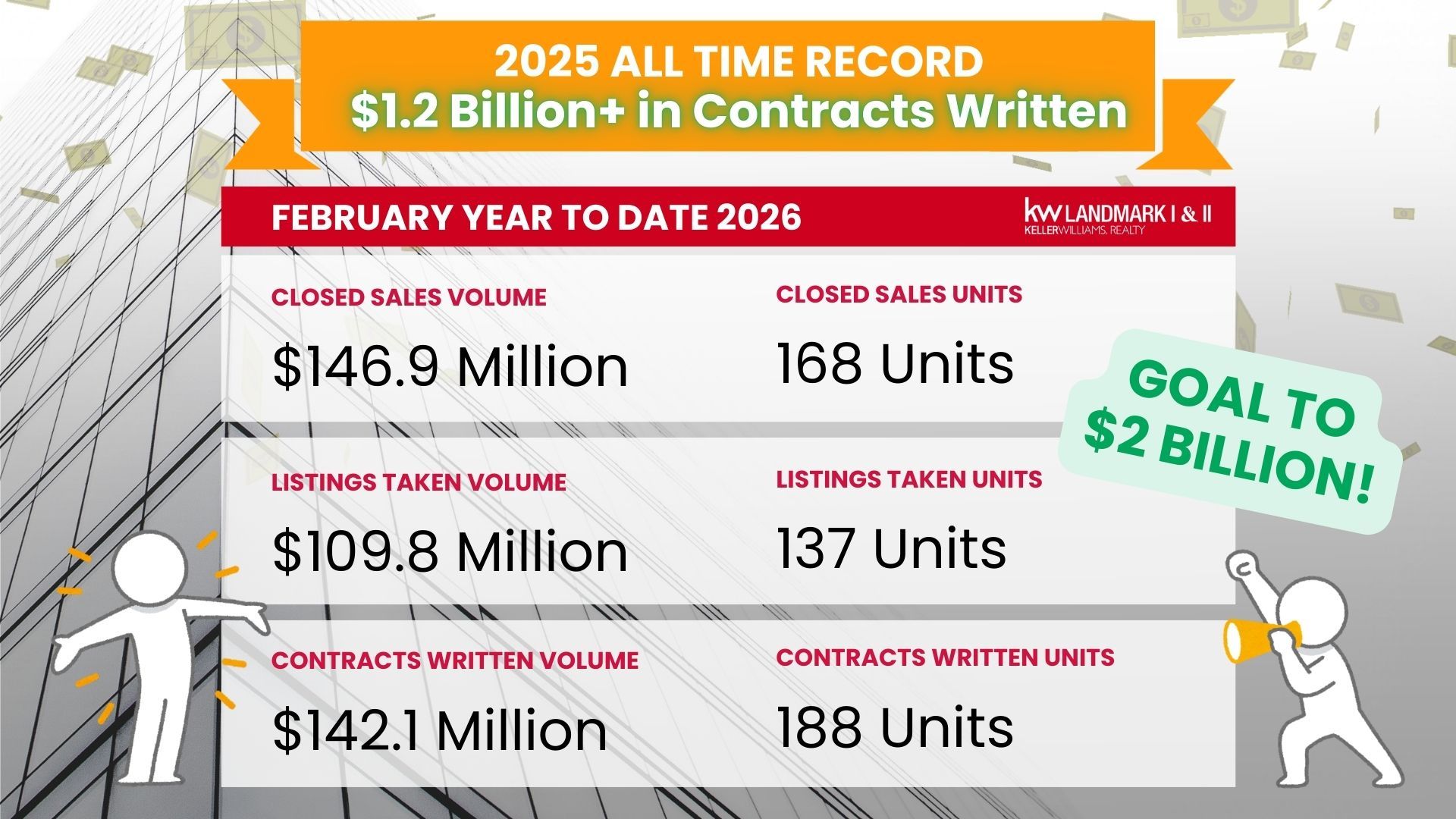
Keller Williams Realty Landmark reports strong 2026 production across Queens, Brooklyn, and Long Island with $146.9M in closed sales and growing momentum.
Keller Williams Realty Landmark agents at Family Reunion showcasing the culture and collaboration of
By KW Landmark March 3, 2026
Discover what makes Keller Williams Realty Landmark different. Learn how our culture of collaboration, growth, and innovation helps agents succeed.
By KW Landmark February 19, 2026
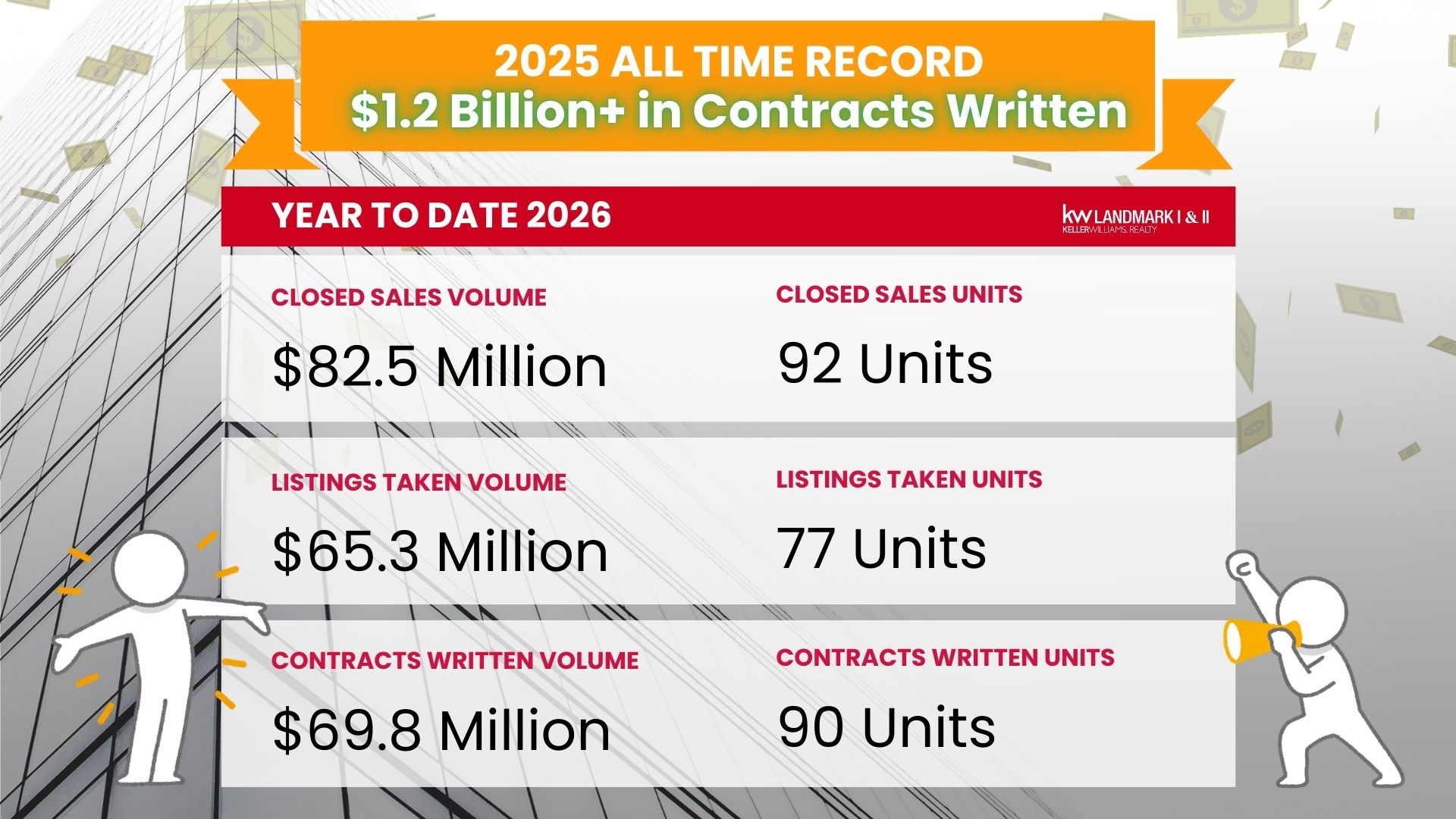
If you’re a homeowner in Queens, Brooklyn, Nassau County, or surrounding NYC areas , you’re probably asking one of two questions: Is now the right time to sell? If I list, will my home actually move? The real answer isn’t emotional. It’s strategic. And 2026 is already giving us clear signals. The Market Is Moving — But Strategy Matters More Than Ever So far this year, our office has: Secured $65.3M in listings taken Written $69.8M in contracts Closed $82.5M in sales Sold 92 units year-to-date That tells us something important: ✔ Homes are being listed ✔ Buyers are writing contracts ✔ Deals are closing But here’s the truth most homeowners don’t hear: The homes that are winning are positioned correctly from day one. Overpricing, weak presentation, or poor negotiation strategy will cost you time and money in today’s environment. What Sellers in Queens Need to Know In neighborhoods across Queens — from Bayside and Flushing to Forest Hills and Whitestone — buyers are educated. They are comparing closed sales. They are analyzing days on market. They know when something is overpriced. If your pricing is even 5% off in today’s market, you lose momentum. And once momentum is gone, you don’t get it back easily. What’s Happening in Brooklyn Right Now Brooklyn sellers are facing a more competitive landscape, especially in: Brownstone markets Condo resales Co-op inventory Buyers are cautious. They negotiate. They expect value. That doesn’t mean homes aren’t selling. It means they’re selling when: The pricing strategy is sharp The marketing is aggressive The negotiation is strong Nassau County & Long Island Sellers: Timing Is Strategic On Long Island, inventory levels and buyer demand are hyper-local. In certain Nassau County pockets, well-priced homes are still moving quickly. But the sellers who assume “it’ll sell because inventory is low” are learning hard lessons. Presentation and negotiation now matter more than ever. Why Office-Level Production Matters to You as a Seller When a Market Center is consistently taking listings, writing contracts, and closing transactions at scale, that translates into: Real-time pricing data Active buyer pipelines Negotiation leverage Deep local market awareness You’re not hiring an agent guessing what the market is doing. You’re hiring someone operating inside it every single week. That difference impacts your final sale price. 3 Powerful Next Steps for Homeowners If you’re even thinking about selling in 2026, do not guess. 🔴 #1 – Get a Strategic Home Value Review Request a detailed, data-backed home value analysis specific to your neighborhood. This is not a Zestimate. This is market positioning. 👉 Request Your Strategic Home Value Review Today 🔴 #2 – Book a Seller Strategy Call Before you list, talk through: Timing Pricing strategy Expected net proceeds Market positioning Even if you’re 3–6 months out, clarity now prevents mistakes later. 👉 We Will Match You With The Perfect Agent For A Strategy Call Final Thought: Don’t Let the Market Decide for You The biggest mistake homeowners are making right now isn’t selling. It’s guessing. The right decision depends on: Your equity position Your timeline Your financial goals Local demand in your exact neighborhood If you’re in Queens, Brooklyn, Nassau County, or surrounding NYC areas, now is the time to get clarity — not headlines. Because in 2026, strategy wins. And sellers who prepare properly are still achieving strong results.  Contact us today!
By KW Landmark February 19, 2026
After a historic 2025—highlighted by $1.2 Billion+ in Contracts Written—we didn’t slow down. We accelerated. As we move through 2026, KW Landmark I & II have already demonstrated that last year wasn’t luck. It was structure. It was leadership. It was culture. And most importantly—it was repeatable. 2026 Year-to-Date Performance Here’s where we stand so far this year: $82.5 Million in Closed Sales Volume 92 Closed Units $65.3 Million in Listings Taken 77 Listings Secured $69.8 Million in Contracts Written 90 Units Under Contract Those numbers represent momentum. And momentum in real estate matters. When listings are taken consistently and contracts are being written at scale, it signals something powerful: the office isn’t reacting to the market — it’s operating confidently within it. What These Numbers Really Mean Volume is not just a vanity metric. It tells a deeper story about systems, skill, and client trust. 1. Listings Are Being Won $65.3M in listings taken year-to-date means our agents are earning the trust of homeowners. In today’s environment, listings are not handed out—they are competed for. Securing them requires pricing precision, presentation strategy, and market knowledge. 2. Contracts Are Converting With $69.8M in contracts written and 90 units under agreement, our agents are not just listing homes—they’re moving them. That reflects negotiation strength and buyer demand alignment. 3. Closings Are Being Delivered $82.5M closed and 92 units sold means transactions are making it to the finish line. In complex NYC and Long Island markets, that’s not automatic. It requires proactive communication, problem-solving, and experience. Why This Matters for Agents At KW Landmark, performance like this confirms what we already know: Our agents are trained for skill, not shortcuts. We prioritize our clients and long-term pipeline building. We operate from systems that create consistency. Collaboration drives production. A strong Market Center creates leverage. It creates referral flow. It creates accountability. It creates opportunity. Agents who plug into an environment producing at this level are not guessing—they are building. And that is exactly what we are committed to at Keller Williams Realty Landmark: becoming the destination for agents who want to grow intelligently and sustainably. What This Translates Into for Clients For home buyers and sellers across Queens, Brooklyn, Long Island, and surrounding NYC areas, these numbers mean something very practical: If You’re Selling: You’re working with agents who know how to win listings and price strategically. Your property is represented by professionals active in the current market—not relying on last year’s playbook. You benefit from collective experience across dozens of active transactions. If You’re Buying: You’re guided by agents who are negotiating contracts weekly. You gain access to professionals deeply connected within the local market. You work with a team that understands inventory shifts and buyer competition in real time. Momentum at the office level creates confidence at the client level. The Bigger Picture 2026 isn’t about chasing last year’s numbers. It’s about proving that KW Landmark’s success is systematic. Predictable. Sustainable. When a Market Center can follow up a billion-dollar year with strong, early momentum, it sends a clear message: This is not a peak. This is a pattern. If you’re an agent looking for a high-performance environment—or a buyer or seller seeking proven guidance—KW Landmark continues to lead with clarity, consistency, and results. Connect with our Team Leader today so you can experience what we are all about Justin Puderbach Team Leader 718-475-2756 jpuderbach@kw.com
By KW Landmark February 11, 2026
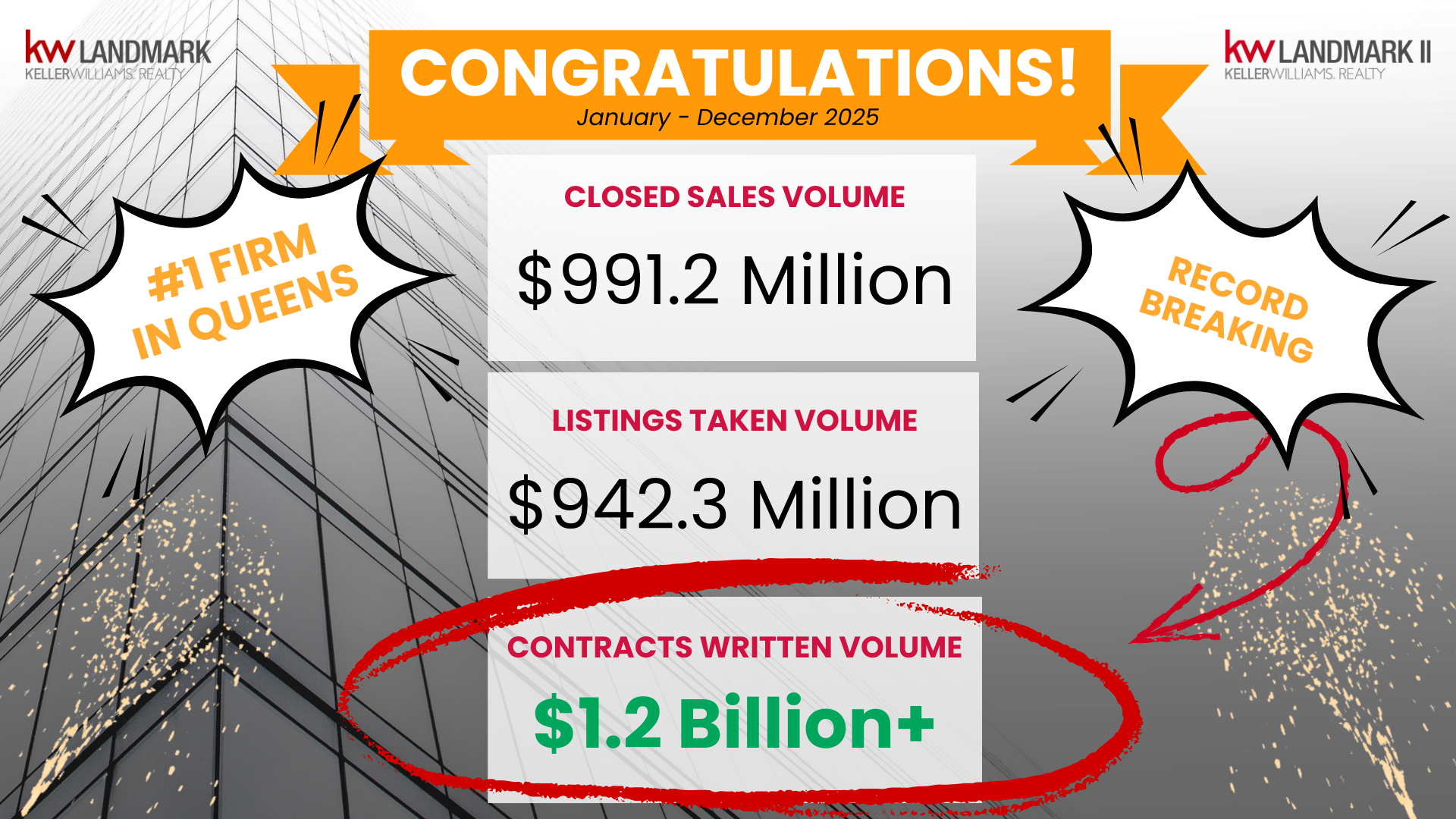
KW Landmark achieved record-breaking success in 2025 with $1.2B+ in contracts. Discover what this means for agents and home buyers & sellers across NYC.
By KW Landmark February 6, 2026
Keller Williams Realty Landmark offers top training, collaborative culture, leadership support, and technology to help agents thrive in today’s market.